The post Hong Kong & Shenzhen appeared first on the teal.
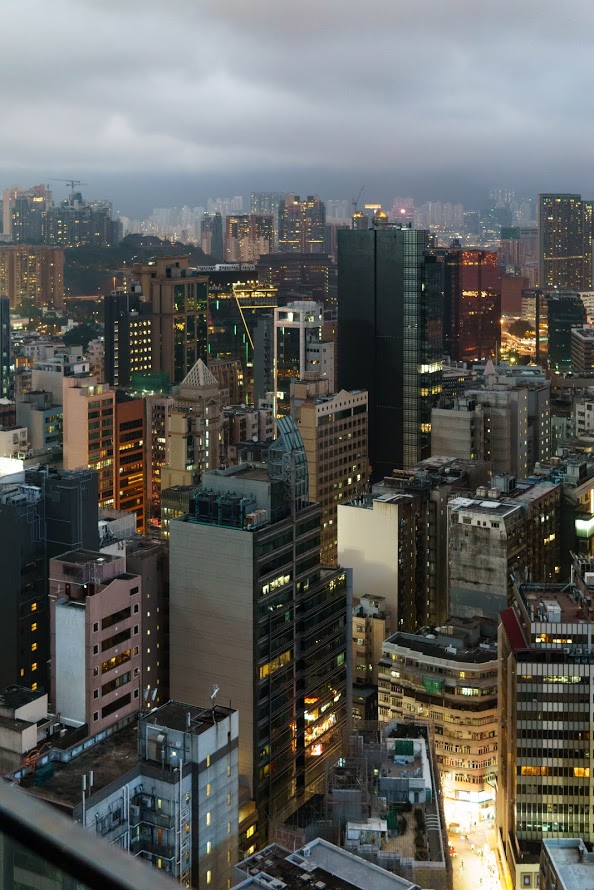
]]>And somehow, there is not much to do here than spending money. Dining out at one of the many fabulous restaurants. Shopping centers everywhere. Just walking around the city, I find myself amidst of a shopping center again. Expensive shops, one is showcasing a gold chain with pigs stacked on top of each other. So ridiculous, and yet there must be people buying it. Even on the peak, where it takes about an hour to get up to, you’ll find a shopping center – a not even a small one, including a Madame Tussaud’s. As if there isn’t anything better to do on the highest mountain of the entire area. Consumerism everywhere – how can all those shops and centers even sustain themselves? Luckily, there are hiking paths, lots of islands and beaches close by to escape to and I immediately understand how desperately these are needed in a metropole like this.
Consumerism everywhere – how can all those shops and centers even sustain themselves?
Walking down the trail from the peak, we are passing fancy-looking apartment buildings that are so high I always lose track counting the floors. Porsches and Lamborghinis are cruising into the parking lot, maids are taking fluffy dogs for a walk. This is where the rich and beautiful live – probably those who would buy the golden pig chain, just because. Again, I’m stunned by the fact that some people can make that much money with their jobs while others, probably equally hard-working, are stuck in the lower salary class. I’m curious how much the rent in this area would be if a regular room (or rather a show box) for regular people already costs more than 1000 Euro per month.
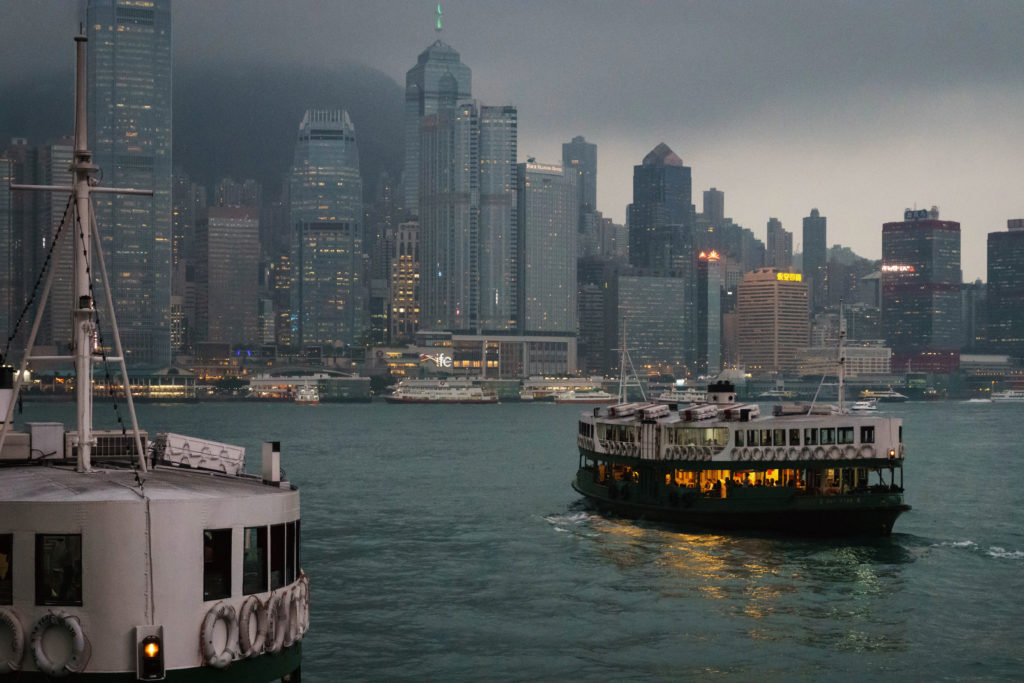
However, Hong Kong definitely has a Western influence: internationls and expats everywhere, and you can see and feel the former British presence with its many pubs and left-hand traffic. Somewhat independent and more open, wherever a Chinese flag is raised, the Hong Kong flag is right next to it to underline that this region is special and not Mainland China.
We decide to make the trip over to Shenzhen, Mainland China, as we are curious why Lonely Planet ranks this city second on the list of ‘top 10 cities to visit in 2019′, and to see what it’s like just a few miles away from Hong Kong. Even though they are kind of the same country, it’s completely different, starting with the entry procedures. Entry into Hong Kong was easy for a European. Entry into Shenzhen requires a visa, which you can get at the border after waiting an hour or two. After obtaining the big sticker in the passport that lets us explore Shenzhen only, we are finally on the way out to the city. A few steps out of the terminal and we are already asked for our photo. No more Google Maps to help us navigate around or Messenger besides the omnipresent WeChat to use. English-speaking people are scarce. Change of currency to bills that are displaying the plump visage of Mao. People are bluntly staring at us, spitting on the relatively new streets that are decorated with plenty of surveillance cameras. They probably can’t wait to get started with the Social Credit System (or have they already?) where every of the citizens’ movements will be tracked and evaluated into a social score.
Just a few steps away from Hong Kong, it’s a completely different world.
Shenzhen was built from out of nothing. Not too long ago, it was only a fishing village, when in 1979 it was decided that Shenzhen should become an economic megacity. And it did. People from all parts of China were flocking into Shenzhen, enticed by the prospects of the first capitalistic window to the world, making it to one of the fastest-growing cities of all times.
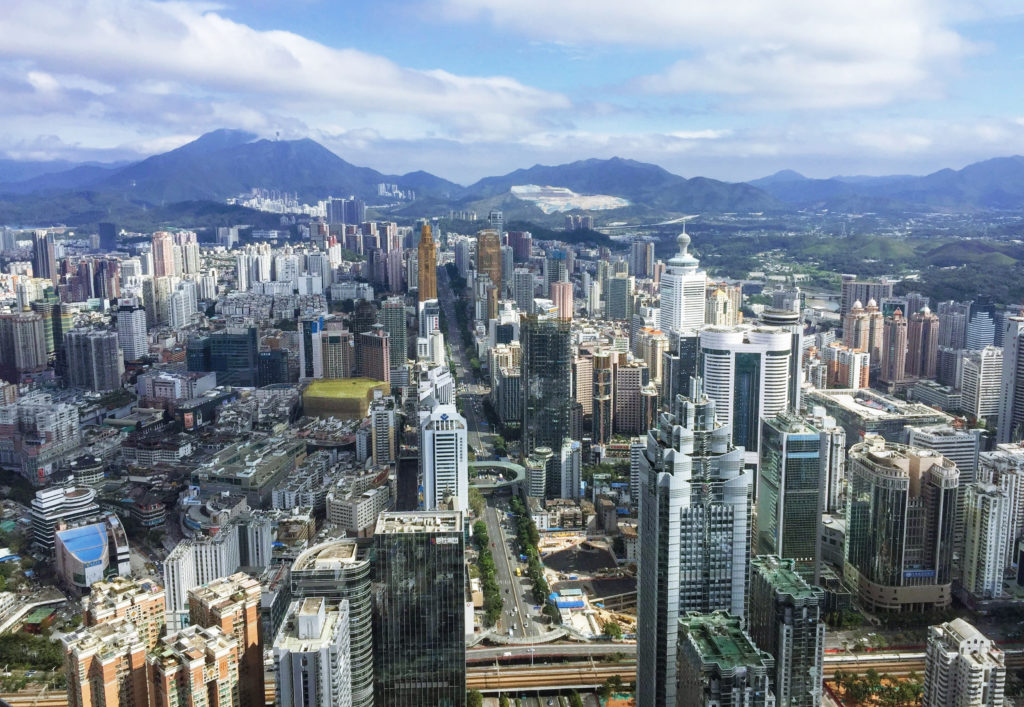
We are heading to the observation deck of the Meridian View Centre to grasp the massive size in a 360 degree view. Skyscrapers wherever you look, and Hong Kong in the distance. We can’t help but notice that Chinese like to show off and create superlatives in whatever way possible: right here, the highest post office service in the world! In a few years, our port will be even bigger than the one in Hong Kong! Shenzhen is the next Silicon Valley! As if they felt the urge to constantly prove something or compete with its famous neighbour. China is so proud of its economic and architectural miracle whereas we can’t get rid of the feeling that it lacks history and a soul.
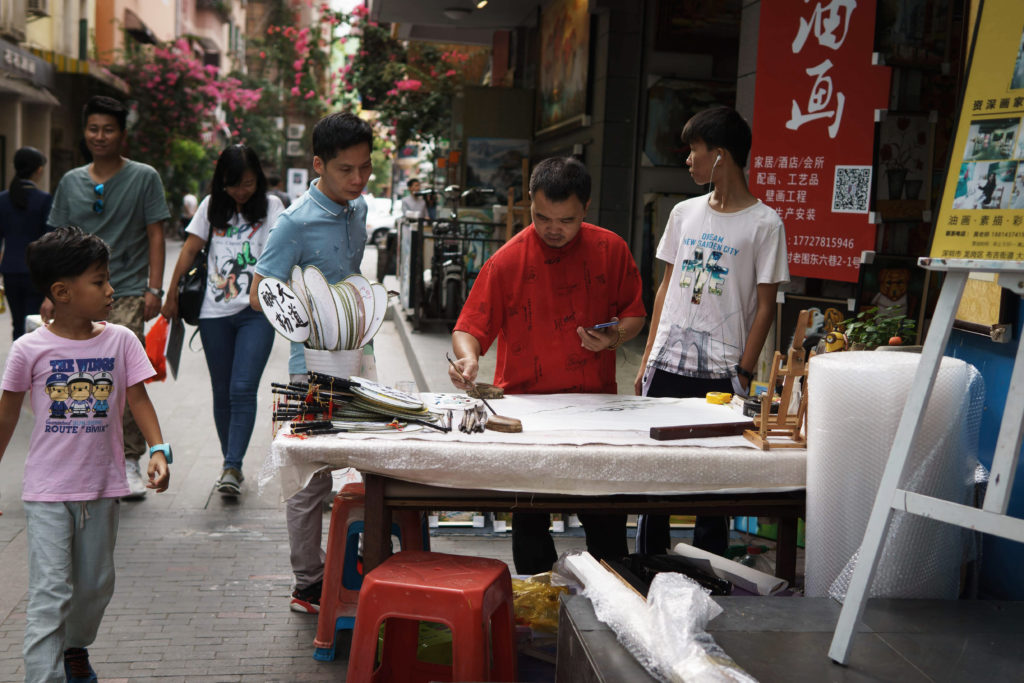
The most interesting attraction a little further out is probably the Dafen Oil Painting Village. That place that you might have seen in featured videos that is known for Chinese artists copying famous paintings. You can find a lot of Van Gogh’s flower still life at every corner that could be the original version, as well as Monet’s rugged landscapes and Klimt’s kiss. Artists right at work, holding their phone with the picture they want to paint in one hand, their brush in the other, sometimes smoking a cigarette simultaneously. However, you can also see artists increasingly making their own creations and it’s wonderful to see that originality is demanded as well. It feels like walking through a big open-air art gallery.
It’s wonderful to see that originality is demanded as well.
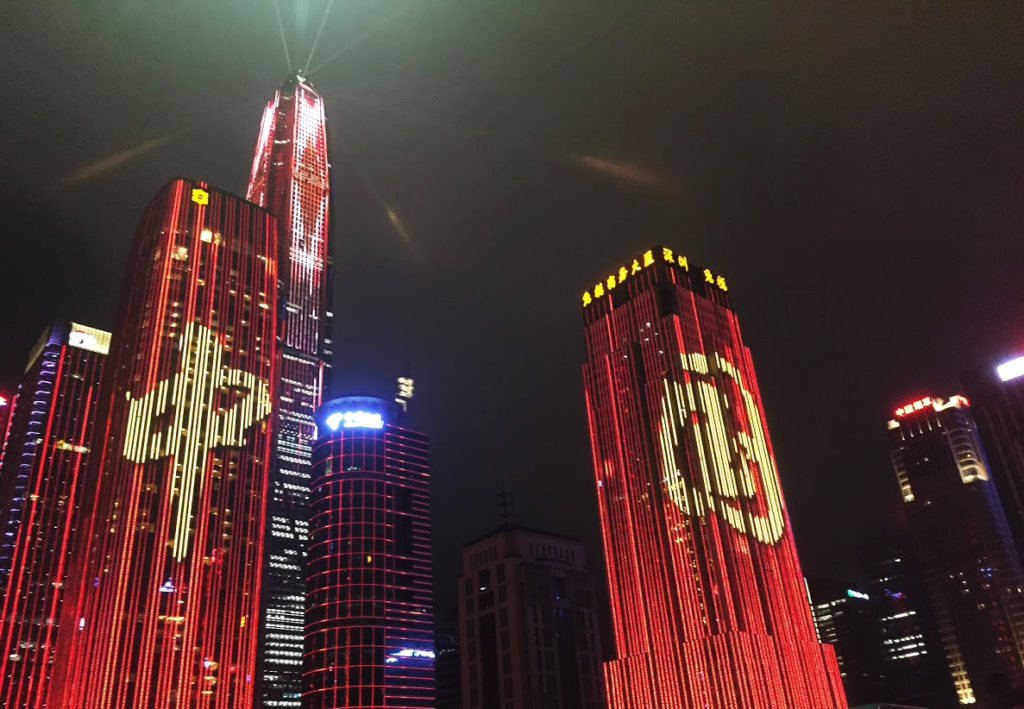
On the way to the terminal to take the fast train back to Hong Kong that only takes 14 minutes, suddenly all the skyscrapers around us start illuminating. Glowing in communicstic red, with patriotic music playing while 中国 (China) is shaping up in big letters on the façades. Just a sublte reminder where you are, if you have forgotten. The light show goes on for 15 minutes, and all buildings in the surrounding are participating in this coordinated spectacle. It’s quite a show and yet, we haven’t heard about it anywhere and just stumbled upon it. People around us don’t seem to be very impressed, they are probably used to it. I’m fascinated, thinking that would never work in my home country as equipping all buildings with enough bulbs and getting them in synch would probably not be possible to just dictate there, not to mention the revulsion it would cause to be that patriotic – another “only in China” moment.
We are not convinced of Lonely Planet’s top ranking of Shenzhen, but simply going for a visit to Mainland China when having the chance is always good for an adventure. However, I’m relieved that this trip is coming to an end and was only for a day as it’s utterly exhausting to be here and frustrating at times. Cannot wait to head back to my favourite China: Taiwan, where people are friendly, the atmosphere is relaxed and down to earth without crazy superlatives and absurdities.
The post Hong Kong & Shenzhen appeared first on the teal.
]]>The post Faroe Islands appeared first on the teal.
]]>I’ve heard a few interesting things about the Faroe Islands. Such as there are more sheep than inhabitants, but the exact number is not known as they are so spread and sometimes hard to reach.
We are picking up our car that will be our companion for the trip. “When you return it, just leave it here with the key in the glove department and the door open. That’s no problem here”, explains Jóan, our renter. The car has an unfoldable tent on top, which I have never seen before, but it’s extremely handy. We are cruising around the island, trying to find a camping place for the night. It’s almost 10pm but the sun is as high as it was in the afternoon. I’ve actually never seen it really dark here, even at 2.45 in the morning, it felt like dawn. So you could actually hike all day and night, if you had the energy.
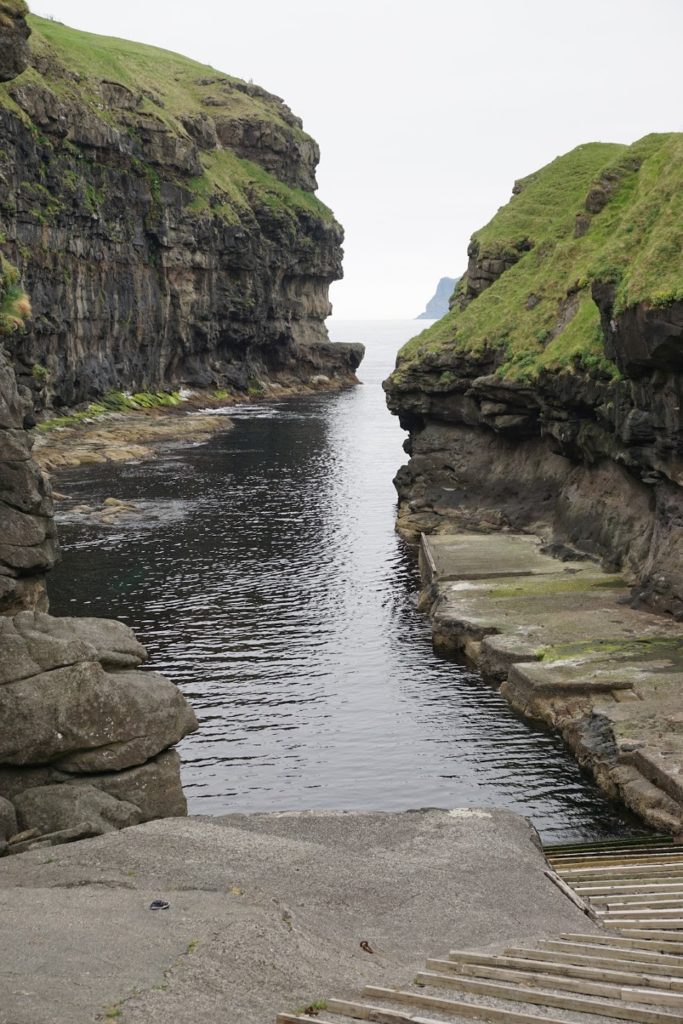
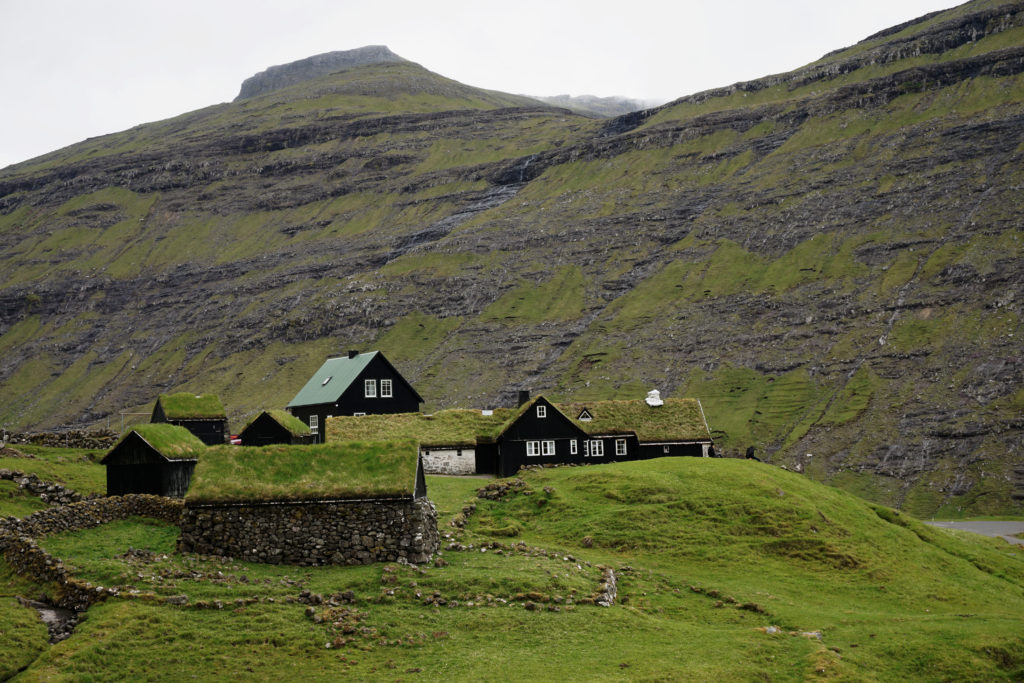
No matter where we are driving, we could just stop anywhere to take pictures. Sun is rare but the permanent overcast gives it a mystical glow. Lord of the Rings could have been shot here, even their language, føroyskt mál, could pass as a dialect of Elvish. Wide open fields, almost no trees. Here and there sheep and their little lambs. Some geese, seagulls screaming. Every house has an incredible view, ocassinally situated on a hill viewing over the ocea. Some are covered in grass roofs and I cannot help it but smile as they blend in so well with the surroundings. One with the nature. We take a break and stand on a cliff next to the ocean, breathing in the crisp, chilly air. Slowing down from the daily routine that chased us the past days.
Not many people that are living here and not many tourists. Unspoiled. The locals are curious and like to engage in conversations with us. We stranded in a restaurant and ordered some fish and chips, and were the only ones. The owner, with rather broken English, did not really understand why we would come all the way to be here.
After the first night in the tent on top of the car, there is no better way to wake up and open the tent to see the ocean and a few sheep nearby in the morning.
We feel so close to nature, soaking in the sound of the waves and birds I’ve never heard before, breathing the salty, crisp air.
We are walking around, visiting villages and despite the stunning beauty that surrounds them, I cannot imagine living here. The Faroe Islands, little brother of Iceland, are so remote. So far from the mainland and big cities. Rather trist weather, so cold and wet all year long, with not even 50.000 inhabitants on the entire archipelago. Must be a great playground as a kid, but opportunities are limited when you are grown up. Not surprising that young people are leaving, and the average age here is rather high.
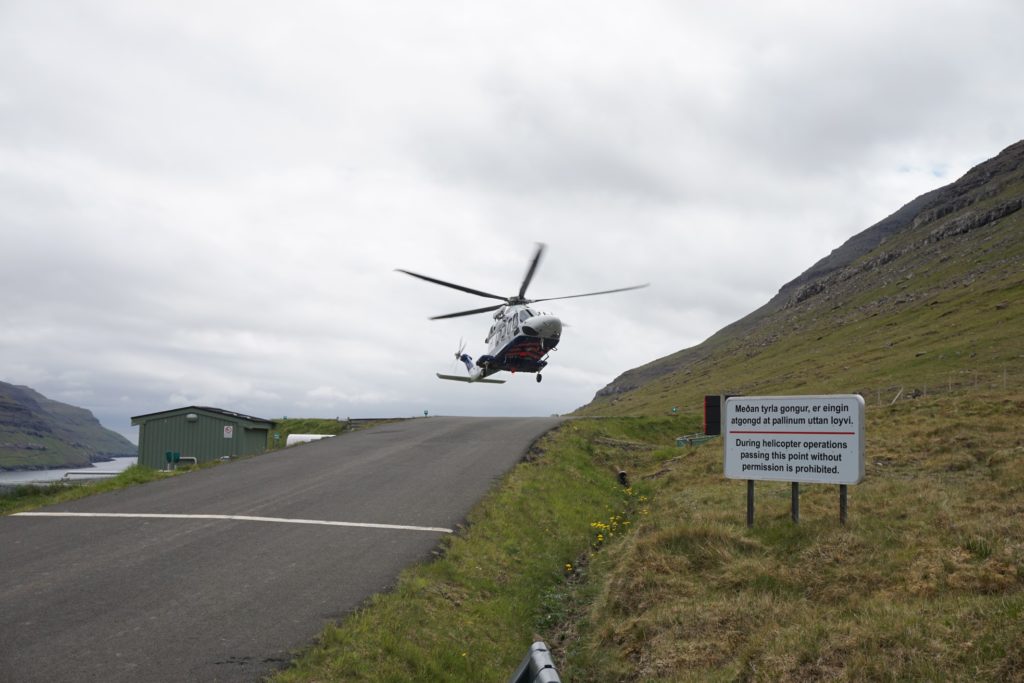
We get to the most remote village you can find here, and it consists of probably ten houses and a church. And a helicopter landing spot. Getting there was really a beautiful little adventure, flying in a helicopter and seeing the mountains, ocean and cliffs from above. It’s seen as a means of transport and subsidized by the government – probably the only place where you can fly in a helicopter as casually as taking the bus? And it only costs as much as a burger.
Such a mystical place with dramatical views wherever you go and houses blending into the nature. It is amazing to spend a few days here to escape reality and feel like in a movie – only too remote in the long run.
The post Faroe Islands appeared first on the teal.
]]>The post Providencia, Colombia appeared first on the teal.
]]>It’s amazing: the island seems rather untouched by big swarms of tourists. Rather, it looks like a village in which you recognize some faces already after a few days. When we rented the moped, we were neither asked for a driver‘s license, nor for a deposit.
“Everyone knows everyone here,” says my instructor. “Sometimes, I see people several times a day and then I hide so they don’t think I’m following them.” He laughs and radiates what the whole island radiates – serenity and joie de vivre. The island seems so different than its neighbor San Andrés, which is only 80 kilometers away and very different from Colombia. Rather, it embodies what one would imagine under Caribbean: a lot of reggae music, people with Rasta hair and the differences in the language: A Caribbean English, which is quite difficult to understand, but also a form of Creole and influences from Spanish. I don’t even know in what language to address people.
Sometimes, I see people several times a day and then I hide so they don’t think I’m following them.
Everything is at a slow pace. Almost every time we go to our Posada, as the accommodations are called here, the homeowner sits in her rocking chair and watches TV. Every day the boys play soccer on the beach. People are always engaged in conversations. Maybe because there is not much more to do? There are hardly any cafes, no bars and certainly no clubs. Twice a week a cargo comes that brings new food and goods. Sometimes, for a short time, there are also fresh, delicious-looking fruit and vegetables in the supermarkets – which are usually put in cans to last longer. Because it is so isolated, everything is also more expensive. If Amazon delivered here, it would be a loss. The island is only reached by a cruel catamaran – not without reason the nickname for this is “Vomiteran”. It feels like you really have to earn it getting here and suffer. Or you fly from San Andrés. Both are quite expensive, and I wonder how the people living here can afford it. Or if they ever got further away from their island at all.
Anyway, my instructor would like to be in a bigger city. Maybe in a big city in Asia, to experience the complete contrast program. “But I would always choose to come back here. I do not want to live anywhere else. For me, this is paradise.”
The post Providencia, Colombia appeared first on the teal.
]]>The post Canoa, Ecuador appeared first on the teal.
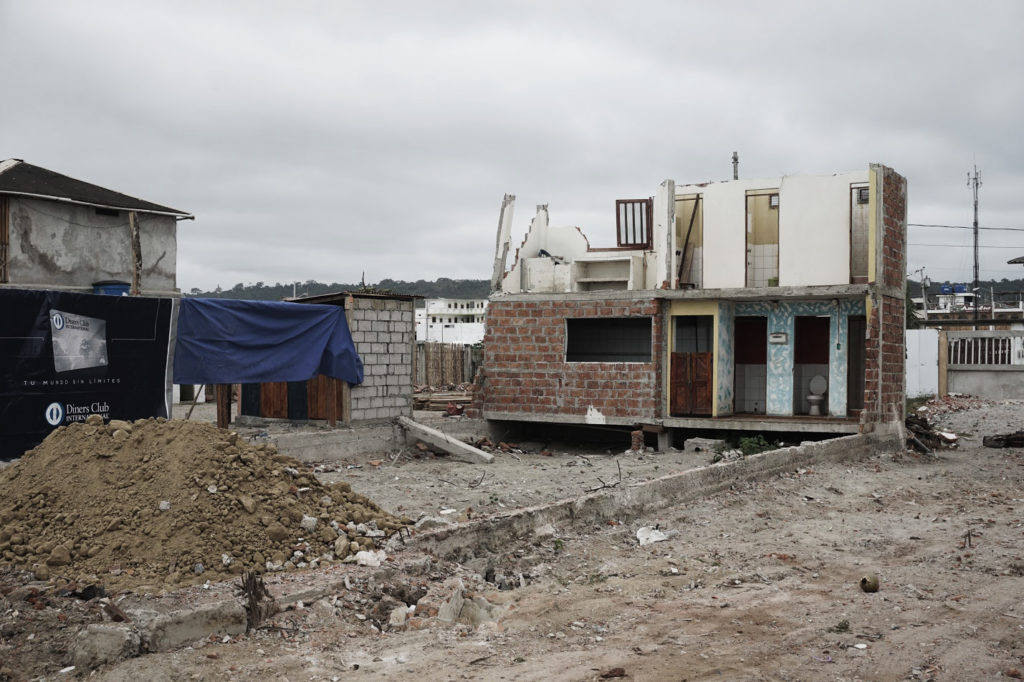
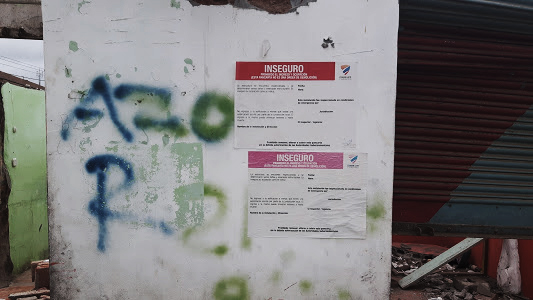
]]>The earthquake from 16th April hit with a magnitude of 7.8, followed by severe aftershocks. The damage was tremendous: More than 660 people lost their lives, many more were injured and over 20,000 left without homes.
Tourists are swerving this area, as there is not much left to do. Everything needs to recover.
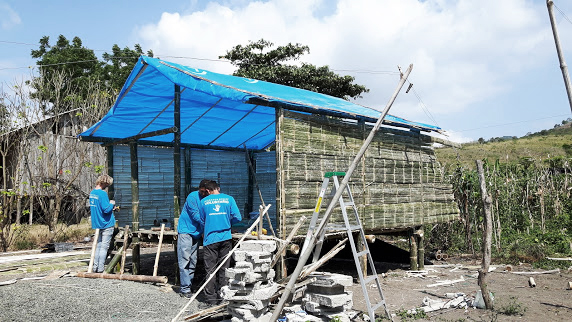
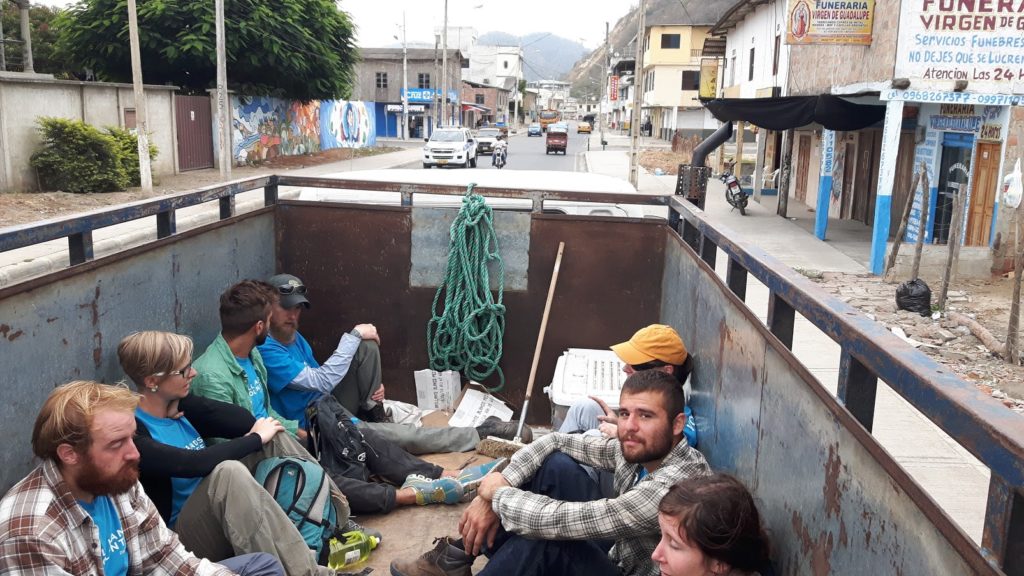
As we wanted to help rebuilding homes, we signed up to be volunteers. Daily life was straight-forward, simple and organized: Every morning after a porridge breakfast at 7.30, all teams went out to their different sites. Work was physically challenging, especially considering the heat. Needing to wear long-sleeved clothes, due to the fear of being bit by mosquitoes that can infect you with all kinds of diseases, didn’t make it easier. From chopping bamboo, carrying and sorting donation boxes to even building an entire home from scratch.
After a day of work, you are simply exhausted. But in a good way, after spending all day outside contributing to helping locals to get a new home. The other volunteers are the most interesting people with fascinated stories that you share at the camp dinner. Locals who have lost so much and who don’t just get their losses covered by an insurance, are yet surprisingly uplifting and positive. In contrast, at home people have more than they need and still complain about not having the latest phone or are resentful of friends or colleagues, instead of being happy for them – it seems to be awfully far and ridiculous now.
Special thanks to All Hands Volunteers for this unique experience.
The post Canoa, Ecuador appeared first on the teal.
]]>